
-20%
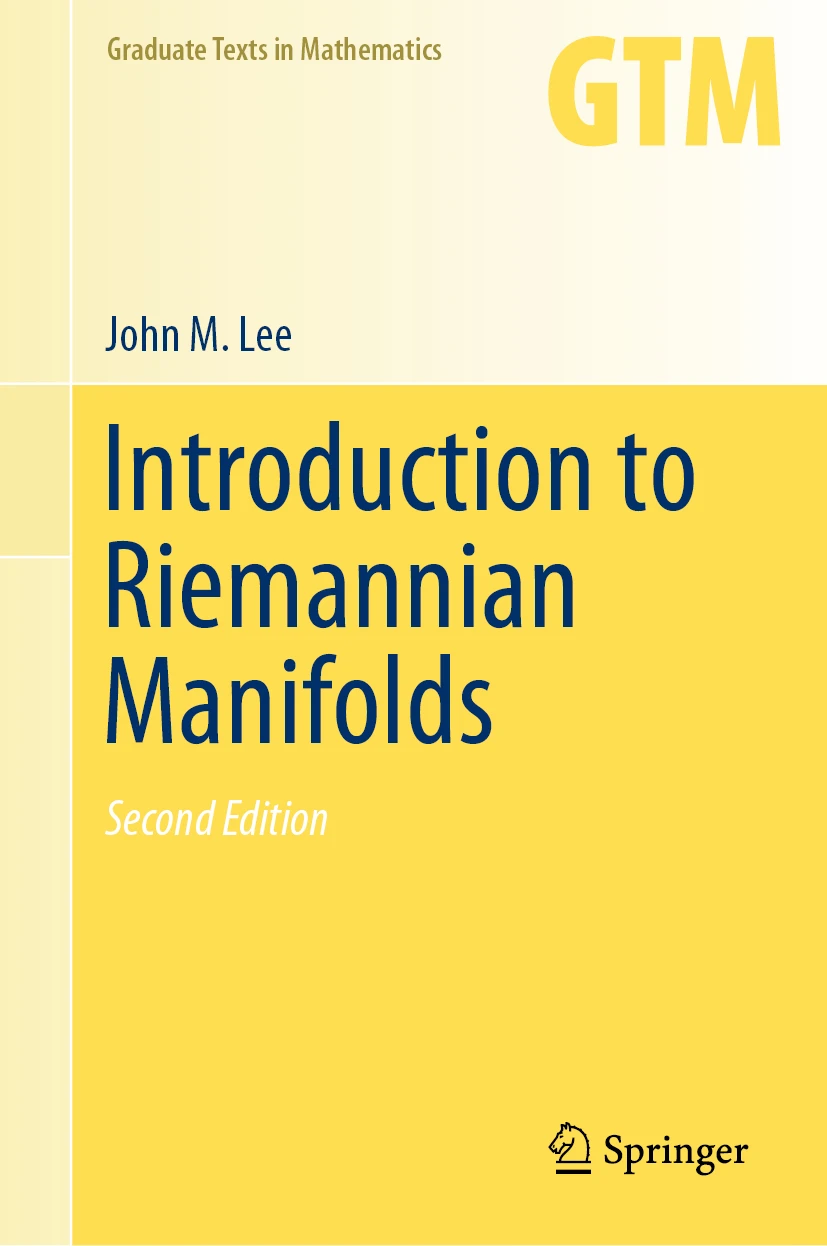
Introduction to Riemannian Manifolds
Price range: ₹4,410.00 through ₹5,661.00
Easy for instructors to adapt the topical coverage to suit their course Develops an intimate acquaintance with the geometric meaning of curvature Gives students strong skills via numerous exercises and problem sets
-20%
Introduction to Riemannian Manifolds
Price range: ₹4,410.00 through ₹5,661.00
Easy for instructors to adapt the topical coverage to suit their course Develops an intimate acquaintance with the geometric meaning of curvature Gives students strong skills via numerous exercises and problem sets
-20%
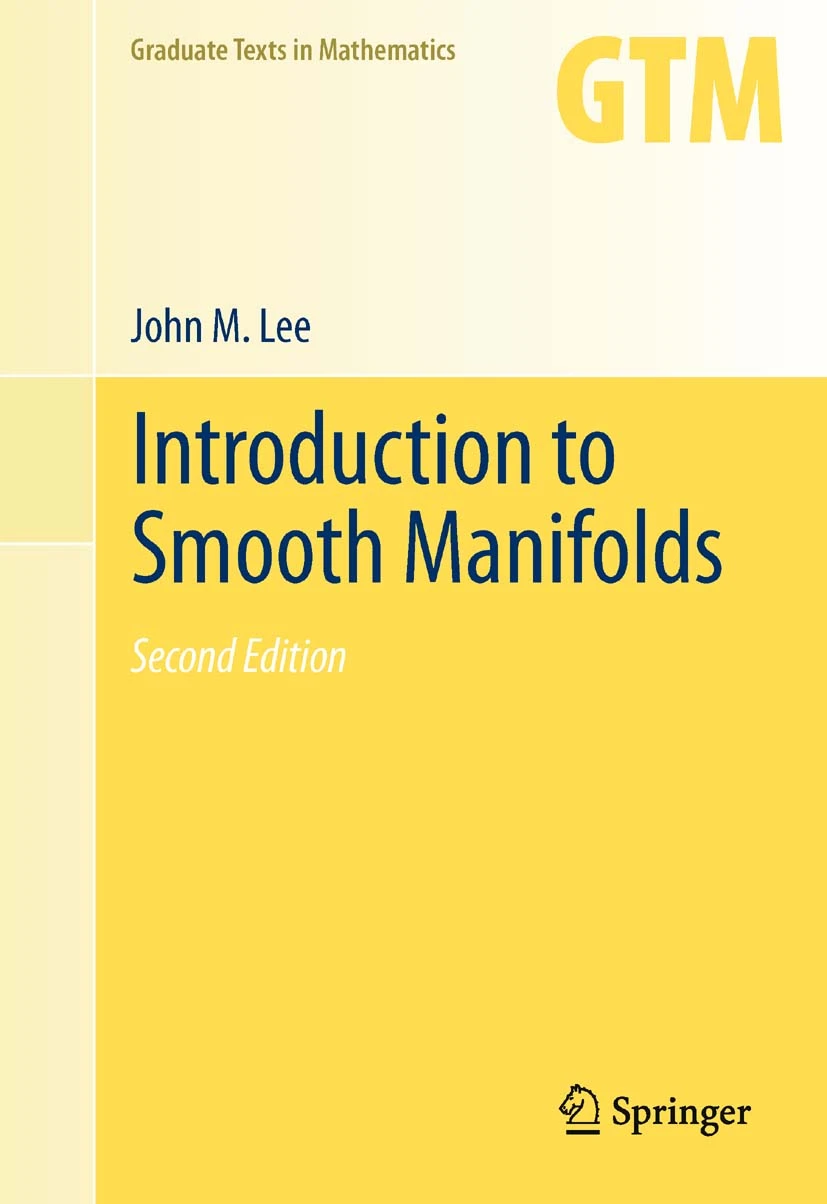
Introduction to Smooth Manifolds
Price range: ₹4,410.00 through ₹6,078.00
New edition extensively revised and clarified, and topics have been substantially rearranged Introduces the two most important analytic tools, the rank theorem and the fundamental theorem on flows, much earlier in the text Added topics include Sard’s theorem and transversality, a proof that infinitesimal Lie group actions generate global group actions, a more thorough study of first-order partial differential equations, a brief treatment of degree theory for smooth maps between compact manifolds, and an introduction to contact structures Includes supplementary material: sn.pub/extras Includes supplementary material: sn.pub/extras
-20%
Introduction to Smooth Manifolds
Price range: ₹4,410.00 through ₹6,078.00
New edition extensively revised and clarified, and topics have been substantially rearranged Introduces the two most important analytic tools, the rank theorem and the fundamental theorem on flows, much earlier in the text Added topics include Sard’s theorem and transversality, a proof that infinitesimal Lie group actions generate global group actions, a more thorough study of first-order partial differential equations, a brief treatment of degree theory for smooth maps between compact manifolds, and an introduction to contact structures Includes supplementary material: sn.pub/extras Includes supplementary material: sn.pub/extras
-20%
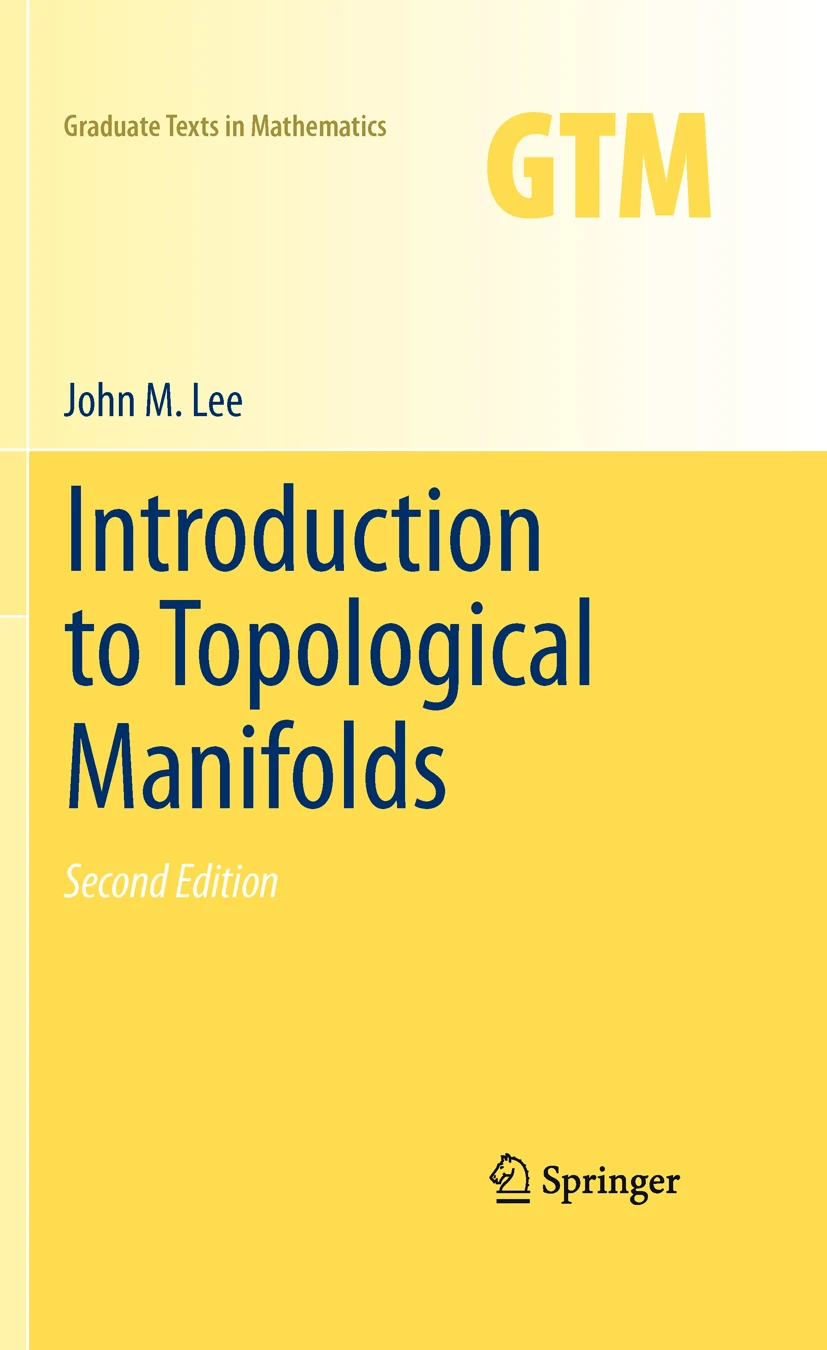
Introduction to Topological Manifolds
Original price was: ₹6,554.00.₹5,244.00Current price is: ₹5,244.00.
New edition extensively revised and updated New introduction to CW complexes (along with a brief and streamlined introduction to simplicial complexes) Expanded treatments of manifolds with boundary, local compactness, group actions, proper maps, and a new section on paracompactness
-20%
Introduction to Topological Manifolds
Original price was: ₹6,554.00.₹5,244.00Current price is: ₹5,244.00.
New edition extensively revised and updated New introduction to CW complexes (along with a brief and streamlined introduction to simplicial complexes) Expanded treatments of manifolds with boundary, local compactness, group actions, proper maps, and a new section on paracompactness
-20%
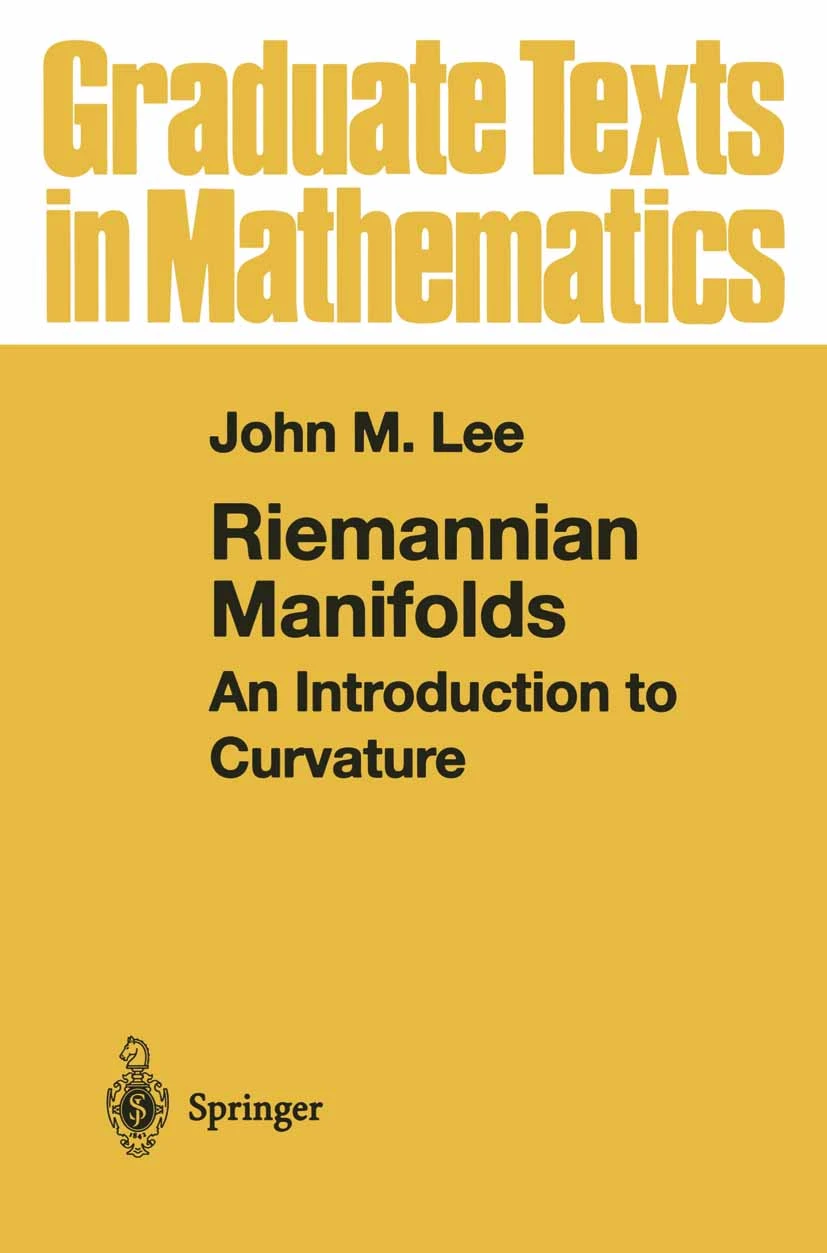
Riemannian Manifolds: An Introduction to Curvature
Original price was: ₹6,863.00.₹5,491.00Current price is: ₹5,491.00.
This book is designed as a textbook for a one-quarter or one-semester graduate course on Riemannian geometry, for students who are familiar with topological and differentiable manifolds. It focuses on developing an intimate acquaintance with the geometric meaning of curvature. In so doing, it introduces and demonstrates the uses of all the main technical tools needed for a careful study of Riemannian manifolds. The author has selected a set of topics that can reasonably be covered in ten to fifteen weeks, instead of making any attempt to provide an encyclopedic treatment of the subject. The book begins with a careful treatment of the machinery of metrics, connections, and geodesics,without which one cannot claim to be doing Riemannian geometry. It then introduces the Riemann curvature tensor, and quickly moves on to submanifold theory in order to give the curvature tensor a concrete quantitative interpretation. From then on, all efforts are bent toward proving the four most fundamental theorems relating curvature and topology: the Gauss–Bonnet theorem (expressing the total curvature of a surface in term so fits topological type), the Cartan–Hadamard theorem (restricting the topology of manifolds of nonpositive curvature), Bonnet’s theorem (giving analogous restrictions on manifolds of strictly positive curvature), and a special case of the Cartan–Ambrose–Hicks theorem (characterizing manifolds of constant curvature). Many other results and techniques might reasonably claim a place in an introductory Riemannian geometry course, but could not be included due to time constraints.
-20%
Riemannian Manifolds: An Introduction to Curvature
Original price was: ₹6,863.00.₹5,491.00Current price is: ₹5,491.00.
This book is designed as a textbook for a one-quarter or one-semester graduate course on Riemannian geometry, for students who are familiar with topological and differentiable manifolds. It focuses on developing an intimate acquaintance with the geometric meaning of curvature. In so doing, it introduces and demonstrates the uses of all the main technical tools needed for a careful study of Riemannian manifolds. The author has selected a set of topics that can reasonably be covered in ten to fifteen weeks, instead of making any attempt to provide an encyclopedic treatment of the subject. The book begins with a careful treatment of the machinery of metrics, connections, and geodesics,without which one cannot claim to be doing Riemannian geometry. It then introduces the Riemann curvature tensor, and quickly moves on to submanifold theory in order to give the curvature tensor a concrete quantitative interpretation. From then on, all efforts are bent toward proving the four most fundamental theorems relating curvature and topology: the Gauss–Bonnet theorem (expressing the total curvature of a surface in term so fits topological type), the Cartan–Hadamard theorem (restricting the topology of manifolds of nonpositive curvature), Bonnet’s theorem (giving analogous restrictions on manifolds of strictly positive curvature), and a special case of the Cartan–Ambrose–Hicks theorem (characterizing manifolds of constant curvature). Many other results and techniques might reasonably claim a place in an introductory Riemannian geometry course, but could not be included due to time constraints.