
-20%
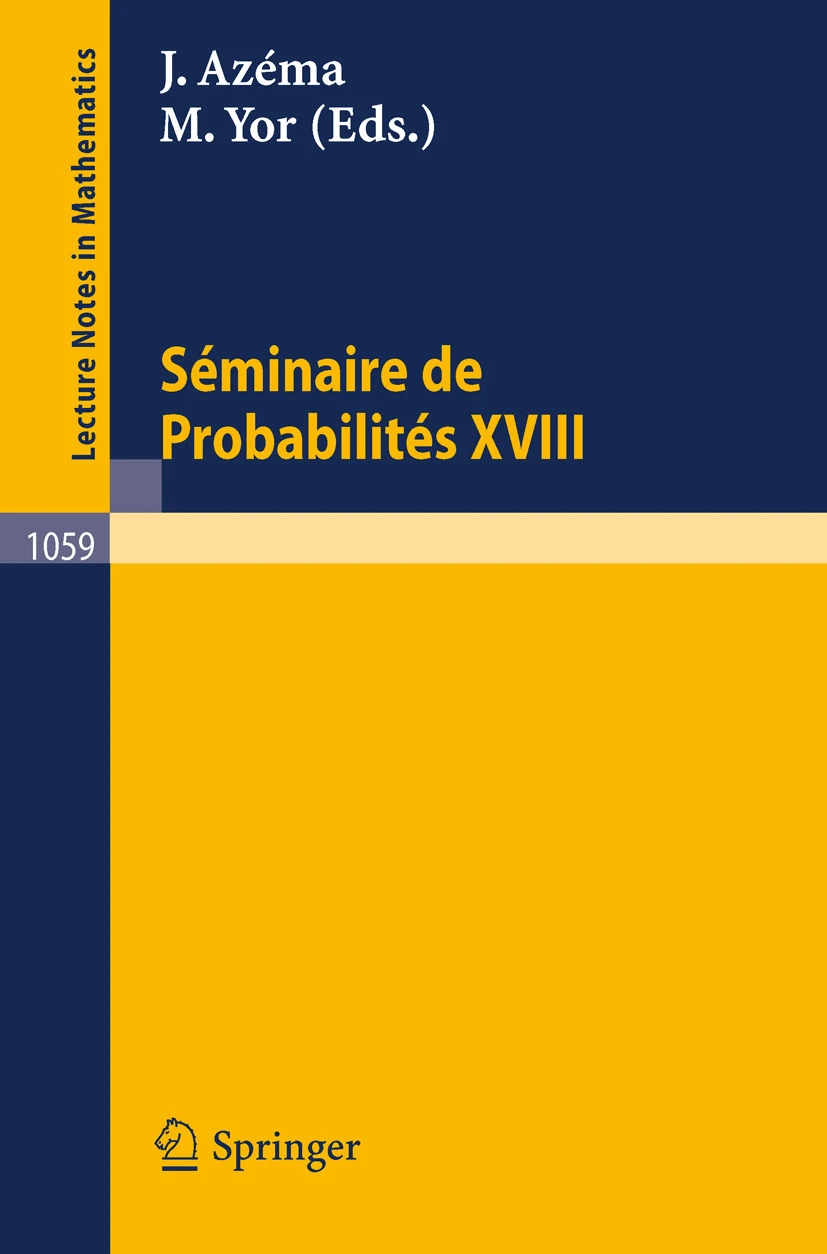
Séminaire de Probabilités XVIII 1982/83: Proceedings
Original price was: ₹4,986.00.₹3,989.00Current price is: ₹3,989.00.
Additional information
| Book Format | Hardcover, Softcover |
|---|
Book information
Edition
1st Edition
ISBN [Softcover]
9783540133322
Publisher
Springer
Year
1984
Pages
IV, 522 p.
Series Title
Lecture Notes in Mathematics
Language
English
Related Products
-20%
(Mostly) Commutative Algebra
Original price was: ₹5,511.00.₹4,410.00Current price is: ₹4,410.00.
Offers a unified presentation of stability results for dynamical systems using Lyapunov-like characterizations Provides derivation of strong/weak complete instability results for systems in terms of Lyapunov-like and comparison functions Discusses combined stability and avoidance problem for control systems from the perspective of Lyapunov functions
-20%
(Mostly) Commutative Algebra
Original price was: ₹5,511.00.₹4,410.00Current price is: ₹4,410.00.
Offers a unified presentation of stability results for dynamical systems using Lyapunov-like characterizations Provides derivation of strong/weak complete instability results for systems in terms of Lyapunov-like and comparison functions Discusses combined stability and avoidance problem for control systems from the perspective of Lyapunov functions
-20%
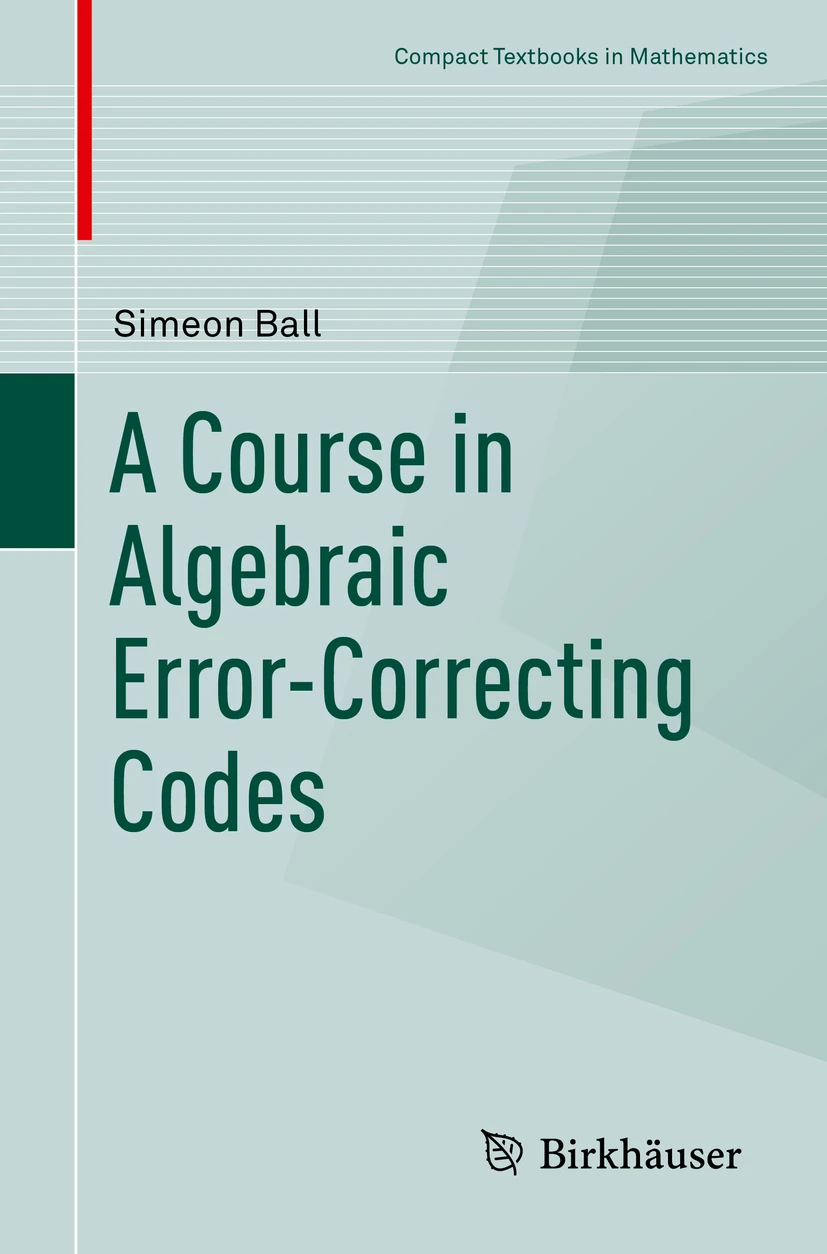
A Course in Algebraic Error-Correcting Codes
Original price was: ₹4,990.00.₹3,993.00Current price is: ₹3,993.00.
Provides a rigorous mathematical perspective on error-correcting codes Offers a pathway from the basics to the state-of-the-art, suitable for either independent study or the classroom Corresponds to a one-semester course, where each chapter suits a two-hour lecture Includes numerous helpful exercises with selected solutions provided Includes supplementary material: sn.pub/extras
-20%
A Course in Algebraic Error-Correcting Codes
Original price was: ₹4,990.00.₹3,993.00Current price is: ₹3,993.00.
Provides a rigorous mathematical perspective on error-correcting codes Offers a pathway from the basics to the state-of-the-art, suitable for either independent study or the classroom Corresponds to a one-semester course, where each chapter suits a two-hour lecture Includes numerous helpful exercises with selected solutions provided Includes supplementary material: sn.pub/extras
-20%
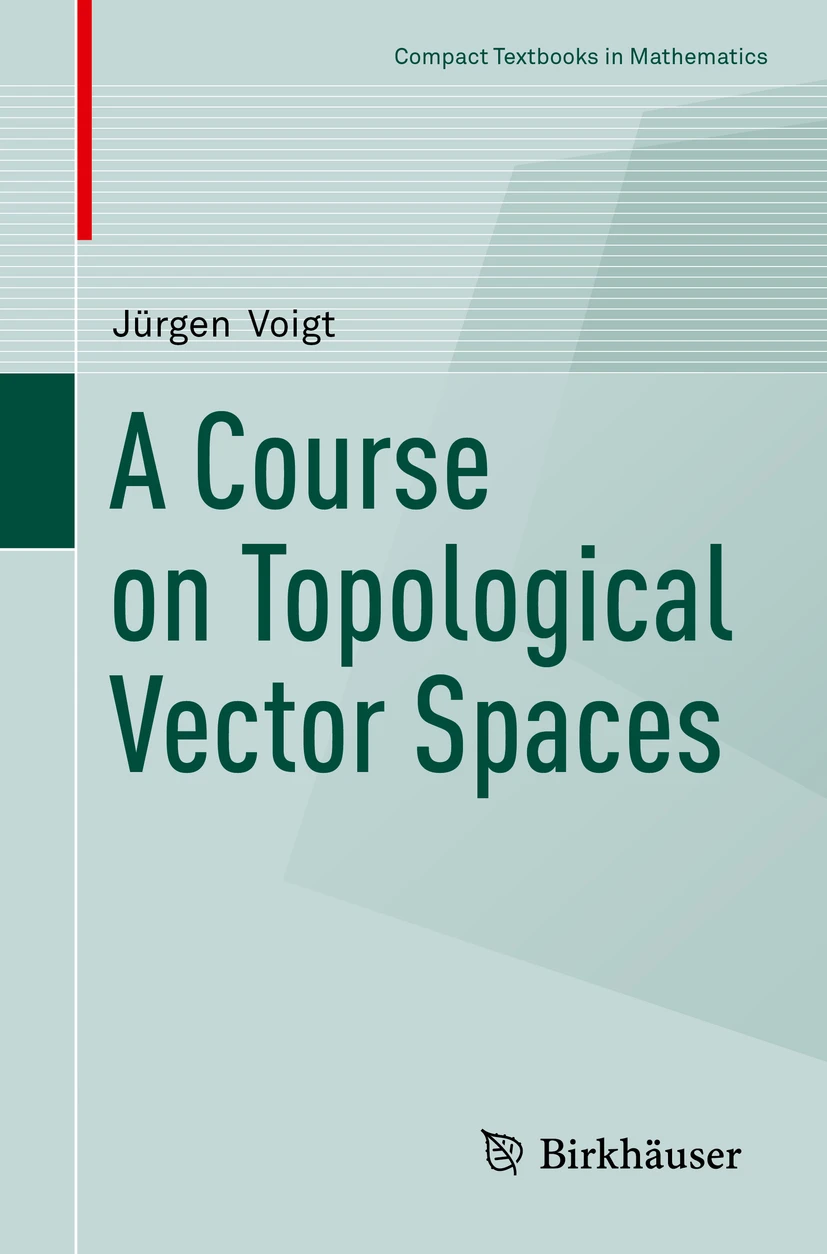
A Course on Topological Vector Spaces
Original price was: ₹4,260.00.₹3,409.00Current price is: ₹3,409.00.
Includes a streamlined introduction to the duality theory of locally convex spaces, culminating in the Mackey-Arens theorem Treats various important topics concerning the weak topology of Banach spaces Discusses examples of function spaces which occur in applications to differential operators and measure theory Provides as a highlight the treatment of weak compactness in L_1-spaces
-20%
A Course on Topological Vector Spaces
Original price was: ₹4,260.00.₹3,409.00Current price is: ₹3,409.00.
Includes a streamlined introduction to the duality theory of locally convex spaces, culminating in the Mackey-Arens theorem Treats various important topics concerning the weak topology of Banach spaces Discusses examples of function spaces which occur in applications to differential operators and measure theory Provides as a highlight the treatment of weak compactness in L_1-spaces
-20%
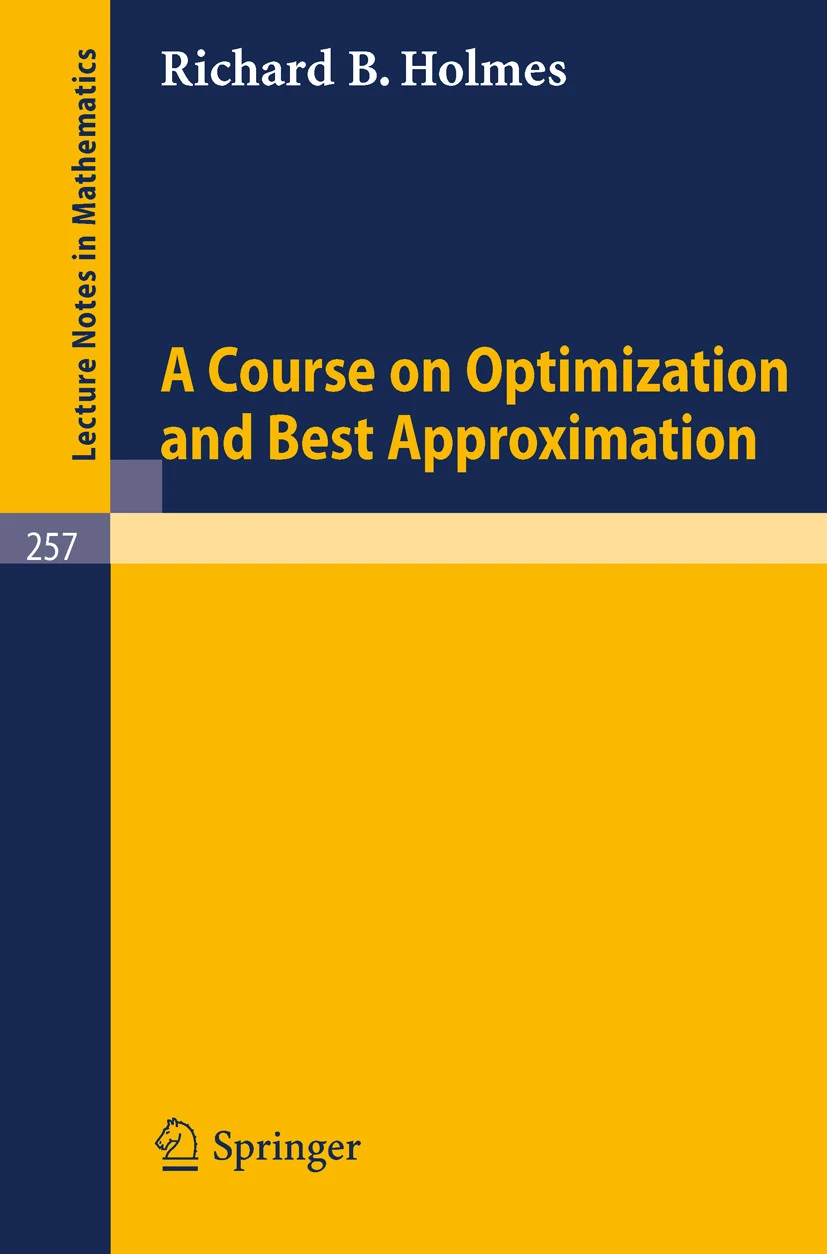
A Course on Optimization and Best Approximation
Original price was: ₹5,511.00.₹4,410.00Current price is: ₹4,410.00.
-20%
A Course on Optimization and Best Approximation
Original price was: ₹5,511.00.₹4,410.00Current price is: ₹4,410.00.
Reviews
There are no reviews yet.